
Strip away the marketing, and the search for the best forex brokers in 2026 — at least for US traders — comes down to a short, elite roster: a handful of CFTC-registered, NFA-member dealers that survived two decades of regulatory consolidation. Our benchmarking desk spent the opening months of 2026 running four of them — IG (operating in the US as tastyfx), OANDA, FOREX.com, and Interactive Brokers — through a six-arena scoring model covering the full lifecycle of a trading account, from the first deposit to the thousandth fill. The most surprising result of the entire exercise: the broker with the tightest headline pricing was not the cheapest choice for two of our three trader archetypes. All four are elite. Each one wins for a different trader. The Verdict Matrix below shows who wins what — and the decision router near the end tells you which one is yours.
The Verdict Matrix — Best Forex Brokers 2026 at a Glance
| Criterion | IG / tastyfx | OANDA | FOREX.com | Interactive Brokers |
|---|---|---|---|---|
| Overall benchmark score (0–100) | 88 | 86 | 89 | 91 |
| Wins arena(s) | Trust & Fund Safety · Research & Education | Funding & Support | Platform Ecosystems | True Cost · Execution |
| Best for (persona) | First-year traders | Casual and API-first traders | MetaTrader and multi-platform traders | Scalpers, algos, professionals |
| Cost tier | Moderate (all-in spread) | Moderate (spread or raw+commission) | Low (raw tier) to Moderate (standard) | Lowest (raw interbank + commission) |
| Platform ecosystem | Proprietary-first, highly polished | Proprietary + MetaTrader + TradingView + REST API | Widest: MT4, MT5, TradingView, proprietary, API | TWS + industry-standard API + TradingView link |
| Regulation footprint | CFTC/NFA (US) plus FCA, ASIC and others via IG Group | CFTC/NFA (US) plus FCA and other global licenses | CFTC/NFA (US) plus FCA and others via StoneX | CFTC/NFA (US) plus SEC/FINRA and global licenses |
| Minimum to start | Low three figures | None | Low (around one hundred dollars) | None |
The best forex broker in 2026 depends on your profile: IG’s tastyfx for first-year traders who want a polished platform and structured education, OANDA for flexible sizing and clean API access with no minimum, FOREX.com for MetaTrader loyalists and platform breadth, and Interactive Brokers for the lowest all-in costs and professional-grade execution.
Methodology strip. Scores are the desk’s editorial benchmark ratings, built from three inputs: each broker’s published pricing schedules and account documentation; regulatory records verified through the NFA BASIC database; and each firm’s platform capabilities, execution-model mechanics, and public execution disclosures. Six arenas, weighted: Costs 25 · Execution 20 · Platforms 20 · Trust 20 · Research 10 · Service 5. No broker paid for inclusion, and no arena verdict rests on a marketing claim we could not trace to documentation.
Meet the Contenders
Four dossier cards. These are not reviews — they are intelligence briefs on how each firm fights.
IG / tastyfx — The Heavyweight With a New Corner

IG is the oldest name in this report: a London-founded spread-betting and derivatives pioneer from the 1970s that grew into a publicly listed global dealer serving hundreds of thousands of clients across dozens of markets. In the United States it operates as tastyfx, the forex-dedicated arm that inherited IG’s pricing engine and paired it with the education-heavy culture of the tastytrade family. Execution runs through a dealing-desk model with deep internal liquidity, which in practice means consistent quoted pricing rather than raw interbank feeds. Its fighting style: the disciplined champion — nothing exotic, everything drilled to a polish.
| Founded: 1974 (IG Group) | HQ: London / Chicago (US) | Regulators: CFTC & NFA (US), FCA, ASIC and others | Execution: dealing desk / internalized |
|---|
OANDA — The Transparency Purist

OANDA built its reputation in the 1990s as a currency-data company before it was a broker, and that DNA still shows: open historical rate data, a public order book, granular pricing disclosure, and one of the earliest serious REST APIs in retail forex. Now owned by a private-equity parent, it operates as a market maker in the US while publishing more of its own pricing behavior than most rivals. Fractional unit sizing — down to a single currency unit — makes it the most flexible risk-sizing venue in this report. Fighting style: the open-book counterpuncher who shows you the tape.
| Founded: 1996 | HQ: New York | Regulators: CFTC & NFA (US), FCA and other global licenses | Execution: market maker with published pricing data |
|---|
FOREX.com — The All-Round US Institution
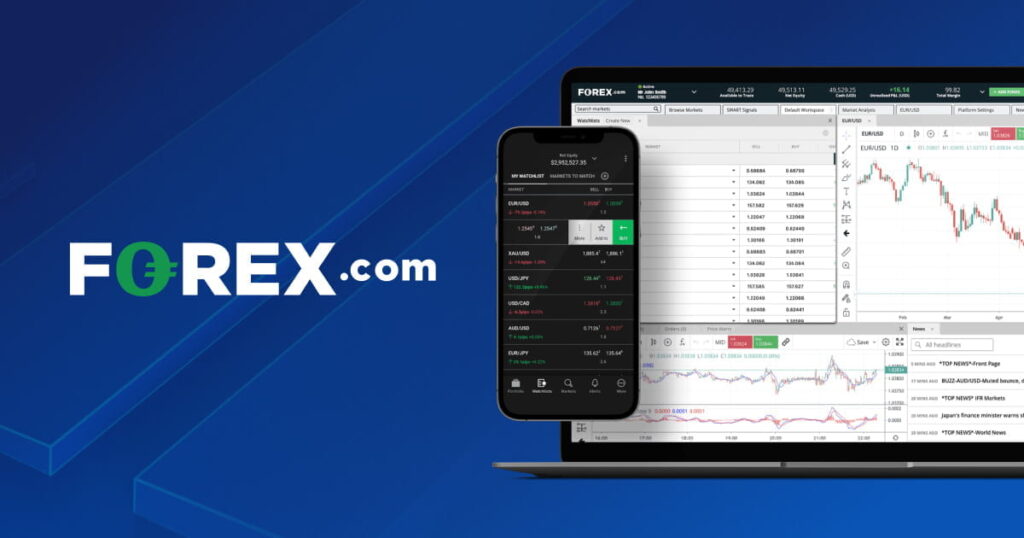
FOREX.com is the retail forex flagship of StoneX Group, a NASDAQ-listed financial-services network with institutional brokerage, payments, and clearing businesses behind it. That parentage gives the brand something rare in retail FX: a genuinely diversified, exchange-listed balance sheet. Its strategic weapon is breadth — it is the only contender fielding MetaTrader 4, MetaTrader 5, TradingView integration, and a full proprietary web/desktop/mobile suite simultaneously, plus a raw-spread account tier for cost-sensitive traders. Execution is internalized with institutional hedging behind it. Fighting style: the decathlete — top-three in everything, unbeatable across the whole card.
| Founded: brand est. 2001 | HQ: New Jersey (StoneX Group, NYC) | Regulators: CFTC & NFA (US), FCA and others via StoneX | Execution: internalized dealer, institutional hedging |
|---|
Interactive Brokers — The Professional’s Raw-Spread Machine
Interactive Brokers is not a forex specialist — it is a global, exchange-listed electronic brokerage that happens to run one of the most efficient currency venues available to individuals. Its IDEALPRO system aggregates quotes from major interbank liquidity providers and passes them through with a transparent commission, an agency-style design rather than a dealing desk. Add the deepest API ecosystem in retail trading and margin financing priced closer to institutional rates than retail ones, and you get the venue serious capital gravitates toward. Fighting style: the quant in the corner who wins on math, not charisma.
| Founded: 1978 | HQ: Greenwich, Connecticut | Regulators: CFTC & NFA, SEC & FINRA (US), plus global licenses | Execution: agency-style aggregated interbank liquidity |
|---|
All four contenders are CFTC-registered, NFA-member firms legally accepting US clients — a distinction that already places them in the top tier of regulated forex brokers worldwide, because the US regime admits only a short list of heavily capitalized dealers. Keep that in mind as the arenas begin: this is a fight among finalists.
Arena 1 — The True Cost of Trading: Where Low Spread Forex Brokers Actually Save You Money
Headline spreads are the most gamed number in this industry, which is why the desk refuses to rank on them. Instead, we modeled twelve months of all-in cost — spread class, commission structure, and swap/rollover exposure combined — for three trader archetypes. This is the arena where the report’s most counterintuitive finding lives: the cheapest venue depends on how you trade, and the ranking inverts as holding periods stretch.
| 12-month all-in cost verdict | IG / tastyfx | OANDA | FOREX.com | Interactive Brokers |
|---|---|---|---|---|
| Scalper (≈400 trades/yr, intraday) | Moderate | Moderate | Low (raw tier) | Lowest |
| Swing trader (≈100 trades/yr, ~3-day holds) | Moderate | Moderate | Low | Lowest |
| Position trader (≈20 trades/yr, ~3-week holds) | Low | Moderate | Moderate | Lowest overall, but swap-sensitive |
Model inputs: each broker’s published spread class on EUR/USD and other majors, commission-per-lot structure on raw/commission tiers, and swap/rollover exposure scaled to the archetype’s average holding period. Verdicts are comparative cost classes, not dollar predictions — your instrument mix and timing will move the numbers.
Why the rankings fall this way comes down to two mechanisms. First, the raw-plus-commission math: Interactive Brokers and FOREX.com’s raw account tier quote spreads from effectively interbank levels — on EUR/USD, pricing that consistently ranks among the tightest we’ve reviewed — and charge a transparent commission per lot on top. For a scalper firing hundreds of round turns a year, that structure crushes an all-in spread model, because the commission is fixed while the spread savings compound with every trade. tastyfx and OANDA’s standard accounts bundle everything into the spread: simpler, perfectly respectable, but structurally more expensive at high frequency.
Second, the swap trap. Position traders pay almost nothing in spreads — twenty trades a year makes spread class nearly irrelevant — but they marinate in overnight financing. Rollover costs on a three-week hold can dwarf the entry spread many times over, and here the differences among brokers narrow while the differences among currency pairs explode. Interactive Brokers’ financing rates, benchmarked closer to institutional levels, generally keep it ahead even here, but the gap compresses; meanwhile tastyfx’s all-in pricing stops being a handicap when you barely trade. That is why “low spread forex brokers” is the wrong search for a position trader — the right search is low carry.
One honest caveat the industry rarely offers: no commission-free account is free. The cost is inside the spread, and the only question is whether the bundle beats the itemized bill for your specific trade count.
🏆 Arena winner: Interactive Brokers — raw interbank pricing plus transparent commission wins every archetype. Runner-up: FOREX.com (its raw tier gets closest, with far friendlier onboarding).
Arena 2 — Execution Under Fire
Cost tells you what a broker charges. Execution tells you what a broker does when it matters — at the London open, during the New York overlap, and in the ninety seconds after a nonfarm payrolls or CPI print, when spreads breathe and liquidity thins. This arena scores the four contenders on execution-model mechanics and on the execution statistics the firms themselves publish, and it hands you the stress-test protocol to verify every claim on your own demo account before a dollar is at risk.
The structural divide is agency versus internalized execution. Interactive Brokers’ IDEALPRO routes against aggregated quotes from major interbank liquidity providers — an agency-style design in which the venue’s incentive is throughput, not the other side of your trade. The practical signature: variable spreads that widen honestly in fast markets, fills at the prevailing market, and no requotes by design. The dealing-desk contenders — tastyfx, OANDA, and FOREX.com — internalize flow and hedge net exposure. Done well (and all three are established, heavily regulated operators, not bucket shops), internalization delivers something agency models cannot: smoother quoted pricing through volatility, because the dealer absorbs short-term noise. Done poorly, it produces asymmetric slippage and mysterious spikes — which is exactly why the desk weights published execution disclosures and regulatory history so heavily. FOREX.com’s institutional hedging depth via StoneX and OANDA’s long-standing pricing transparency both earn credit here; tastyfx inherits IG’s decades-refined pricing engine, which is built for consistency rather than raw speed.
The stress-test protocol we recommend before funding any account: run simultaneous demo market orders across two platforms during a scheduled news release; track limit-order fill rates at the London open for two weeks; and log the spread on your primary pair at the same three times daily. Divergence from the broker’s published behavior is your answer.
Five execution metrics every trader should demand from a forex trading broker:
- Average and worst-case slippage, split into positive and negative — symmetry is the honesty test.
- Requote frequency — the correct number in 2026 is zero.
- Fill rate on limit orders during high-volatility windows, not just quiet sessions.
- Spread-widening behavior around scheduled news, versus the advertised typical spread.
- Execution speed in milliseconds, with a distribution, not just an average.
🏆 Arena winner: Interactive Brokers — agency-style aggregated liquidity with structurally aligned incentives. Runner-up: FOREX.com (internalized, but with institutional hedging depth and published execution statistics).
Arena 3 — Platform Ecosystems: MetaTrader, TradingView & Proprietary Tech
Search behavior tells the truth here: traders don’t shop for “a platform,” they shop for their platform. MT4 forex brokers remain their own search category two decades after MetaTrader 4 launched, TradingView has become the default charting layer for a generation, and API access quietly decides where algorithmic capital lands. So the desk maps ecosystems rather than listing features.
| Platform access | IG / tastyfx | OANDA | FOREX.com | Interactive Brokers |
|---|---|---|---|---|
| MetaTrader 4 | No | Yes — supported | Yes — full | No |
| MetaTrader 5 | No | Partial — availability varies by entity | Yes — full | No |
| TradingView integration | Partial — varies by entity | Yes — native | Yes — native | Yes — broker connection |
| Proprietary web/desktop | Yes — flagship | Yes — capable | Yes — full suite | Yes — TWS, professional-grade |
| Mobile app | Yes — excellent | Yes — strong | Yes — strong | Yes — powerful, dense |
| API / algo access | Limited | Yes — REST v20 | Yes — available | Yes — industry standard |
Three mini-battles decide this arena. Charting depth: TradingView’s rise has partly neutralized proprietary charting as a differentiator — both OANDA and FOREX.com plug into it natively, and Interactive Brokers connects as a supported broker, meaning three of the four contenders can live inside the same world-class charts. tastyfx counters with a proprietary interface whose real advantage is coherence: pricing, positions, and analysis in one deliberately simple environment that never overwhelms a newer trader.
Automation and API power: this is Interactive Brokers’ fortress. Its API ecosystem — mature libraries, third-party integrations, and support across essentially every serious programming language — is the closest thing retail trading has to an institutional standard, and it spans currencies, equities, futures, and options in one account. OANDA’s REST v20 API is the strong second: cleaner and faster to learn for a pure-forex Python workflow, with fractional sizing that makes small-account algo testing realistic.
Mobile experience: tastyfx and FOREX.com lead for design polish; Interactive Brokers’ mobile app is enormously capable but unapologetically dense — a professional’s toolbox, not a beginner’s lounge.
If you live in MetaTrader: the routing is short. FOREX.com is the only contender running both MT4 and MT5 at full strength for US clients alongside everything else, which makes it the default home for expert advisors, custom indicators, and anyone migrating an existing MetaTrader setup. OANDA is the credible alternative if you want MetaTrader plus a gentler standard account and a public order book on the side.
🏆 Arena winner: FOREX.com — the only full-spectrum ecosystem: MT4, MT5, TradingView, proprietary, API. Runner-up: Interactive Brokers (narrower lineup, deepest automation stack in the industry).
Arena 4 — Regulation, Trust & Fund Safety: What Separates Regulated Forex Brokers From the Rest
Every broker website says “regulated.” The desk’s job is to convert that word back into verifiable facts, so this arena runs a six-point trust audit rather than repeating assurances.
The audit, in order:
- CFTC registration and NFA membership, verified directly in the NFA BASIC database — not on the broker’s own site.
- Operating longevity without major enforcement disruption — decades of survival under US oversight is itself evidence.
- Capital position and disclosure — publicly listed parents (IG Group, StoneX, Interactive Brokers) file audited accounts the whole market can read; US-listed filings are searchable in SEC EDGAR.
- Segregation of client funds from firm operating capital, per US regulatory requirements.
- Negative balance policy — US rules do not mandate negative balance protection the way European rules do, so each firm’s stated policy on debit balances matters and should be read before funding.
- Dispute-history scan — regulatory actions and arbitration patterns in the public record, weighted by recency and severity.
| Trust audit | IG / tastyfx | OANDA | FOREX.com | Interactive Brokers |
|---|---|---|---|---|
| CFTC/NFA verified (BASIC) | Pass | Pass | Pass | Pass |
| Longevity under oversight | Exceptional | Strong | Strong | Exceptional |
| Capital & disclosure | Exceptional (listed) | Strong (private) | Exceptional (listed) | Exceptional (listed) |
| Client fund segregation | Pass | Pass | Pass | Pass |
| Negative balance policy | Strong | Strong | Strong | Strong — margin-monitored |
| Public dispute record | Strong | Strong | Strong | Strong |
Now the paragraph most roundups skip: the US framework is not a burden here — it is a moat. To touch US retail forex flow at all, a firm must operate as a Retail Foreign Exchange Dealer (RFED) or a futures commission merchant, register with the CFTC, join the NFA, hold capital requirements that would bankrupt a typical offshore outfit, cap retail leverage at 50:1 on major pairs, and enforce FIFO (first-in, first-out) position accounting. Those rules annoy traders who want 500:1 leverage — and they are precisely why the list of us forex brokers is short and elite. Everyone in this report already cleared a bar most of the global industry cannot. The trusted forex brokers label, in other words, is earned upstream of anything a marketing department writes.
The tiebreakers among four passing grades: longevity and disclosure. IG Group has operated under major-market regulation for five decades and publishes audited group accounts as a London-listed company; Interactive Brokers matches the listing transparency and adds one of the largest capital bases in the brokerage world. OANDA, as the one privately held contender, discloses less by structure — not a red flag, simply less public evidence — which is what separates Strong from Exceptional on this card.
🏆 Arena winner: IG / tastyfx — five decades under top-tier regulators with full listed-company disclosure. Runner-up: Interactive Brokers (equal transparency, colossal capital base).
Arena 5 — Research, Education & AI Tooling
The 2026 research stack looks different from the 2020 one: AI-assisted screening, sentiment dashboards, and machine-summarized calendars are now table stakes at the top of the industry. The desk’s honest framing up front: these tools inform — they surface patterns, compress news, and flag positioning extremes — they do not predict. Any broker or vendor implying otherwise belongs in the red-flags section, not this one.
tastyfx wins this arena on the education axis. Backed by the tastytrade content engine and IG’s long-running structured curriculum, it offers the most coherent path from “what is a pip” to genuinely intermediate strategy content, delivered daily rather than dumped in a static library. For a first-year trader, that cadence compounds. OANDA counters with the most distinctive data: its open order book and positioning tools show where real client orders and exposure cluster — information with actual analytical texture, not recycled newswire — plus economic-calendar and rate tooling that reflects its origins as a currency-data company. FOREX.com ships the broadest conventional research suite: integrated news, SMART Signals-style pattern scanning, sentiment reads, and analyst commentary through the StoneX research network — strong, if less differentiated. Interactive Brokers treats research as an aggregation problem: a deep third-party research marketplace, institutional-grade scanners, and AI-driven news summarization inside its ecosystem — immensely powerful, aimed at users who already know what to ask.
🏆 Arena winner: IG / tastyfx — the strongest structured education engine for developing traders. Runner-up: OANDA (positioning data no rival replicates).
Arena 6 — Funding, Withdrawals & Human Support
The least glamorous arena decides more first impressions than any other: how money moves in, how fast it moves out, and whether a human answers at 2 a.m. during the Asian session.
| Operations | IG / tastyfx | OANDA | FOREX.com | Interactive Brokers |
|---|---|---|---|---|
| Deposit rails (US) | ACH, wire, debit card | ACH, wire, debit card | ACH, wire, debit card | ACH, wire |
| Withdrawal speed class | Fast (rail-dependent) | Fast (rail-dependent) | Fast (rail-dependent) | Standard, process-driven |
| Support channels | Phone, chat, email — extended market hours | Phone, chat, email — extended market hours | Phone, chat, email — extended market hours | Phone, chat, email — global but ticket-oriented |
| Opening friction | Low | Lowest — no minimum | Low | Higher — fuller application |
The pattern: the three forex-first dealers optimize onboarding as a funnel — applications measured in minutes, no or low minimums, support staffed around forex hours. OANDA edges the group with no minimum deposit at all and fractional sizing from the first dollar, making it the lowest-friction genuine start in this report. Interactive Brokers sits at the other pole: a longer, more institutional application and a support culture built around tickets and precision rather than hand-holding — perfectly functional, occasionally brisk. Traders with complex situations (entities, multiple asset classes, portfolio margin) will find IBKR’s process thorough for good reason; a first-timer may find it a lot of doors to walk through.
🏆 Arena winner: OANDA — zero minimum, flexible sizing, forex-hours human support. Runner-up: FOREX.com (equally smooth funnel, small minimum).
Head-to-Head Duels
Arena scores answer “who is best at X.” Real traders ask a different question: this one or that one? Three duels, three declared winners, and — because honest benchmarking demands it — the one scenario where each loser wins instead.
IG vs FOREX.com — The Heavyweight Title Fight
Breadth against breadth: a five-decade global dealer versus the flagship of a listed institutional network. Winner: FOREX.com, on ecosystem — MT4, MT5, TradingView, a proprietary suite, and a raw-pricing tier under one roof means it can be whatever kind of broker you need it to be, which IG’s US operation, deliberately streamlined as tastyfx, cannot match on menu length. But the loser wins in one clear scenario: if you are a newer trader who wants one excellent, coherent platform plus the best structured education in the group, tastyfx’s focus beats FOREX.com’s sprawl. Menus are only an advantage to people who already know what to order.
OANDA vs Interactive Brokers — Transparency vs Raw Pricing
The open-book counterpuncher against the quant. Winner: Interactive Brokers, on math — aggregated interbank pricing plus a transparent commission produces the lowest all-in cost in this report, and its API ecosystem is a class of its own. The scenario where OANDA wins instead: accessibility. No minimum deposit, fractional units down to a single unit of currency, a REST API you can be trading through in an afternoon, and positioning data IBKR does not offer. A trader building skill — or an algo developer prototyping with small size — gets more usable broker per dollar of friction at OANDA, then graduates to IBKR when the capital justifies it.
The Beginner’s Duel — Which of the Four Is Safest to Learn On?
“Safest” here means the environment least likely to punish inexperience: clear pricing, no exotic account mechanics, strong education, and a good demo. Winner: tastyfx — the platform’s simplicity is a feature, not a limitation, and the education cadence keeps a first-year trader learning instead of guessing. The scenario where the verdict flips: budget. If starting truly small matters, OANDA’s zero minimum and fractional sizing let a beginner trade meaningfully with pocket-money stakes — the cheapest real-money tuition in the industry. Either way, the first fifty trades belong on a demo account, not a funded one.
Which Forex Broker Should You Choose? The Decision Router
Benchmarks rank brokers; routers rank fit. Find your row.
The First-Year Trader
Route to tastyfx. The proprietary platform is clean enough that the interface never becomes the enemy, the education engine is the strongest in this report, and IG’s five-decade regulatory record removes the trust question entirely so you can spend your attention on learning price behavior instead of vetting your counterparty. If a zero-dollar start matters more than curriculum, OANDA is your alternate. Your move: open a demo with tastyfx and run 50 practice trades before funding.
The Scalper / High-Frequency Trader
Route to Interactive Brokers — it swept both arenas that define your P&L: True Cost (Arena 1) and Execution (Arena 2). Raw aggregated pricing plus commission beats every bundled spread at your trade frequency, and agency-style execution means the venue has no stake in your fills. FOREX.com’s raw tier is the friendlier runner-up if IBKR’s onboarding feels heavy. Your move: open a demo with Interactive Brokers and run 50 practice trades before funding.
The Algorithmic Trader
Route to Interactive Brokers for the industry-standard API (Arena 3), multi-asset reach, and execution quality your backtests silently assume. Prototype-stage builders should note the honorable path: OANDA’s REST v20 API plus fractional sizing is the fastest way to get a small live algo breathing, with a migration to IBKR once size and complexity demand it. Your move: open a demo with Interactive Brokers and run 50 practice trades — algorithmically — before funding.
The MetaTrader Loyalist
Route to FOREX.com — the only contender running MT4 and MT5 at full strength for US clients (Arena 3), which means your expert advisors, indicators, and muscle memory transfer intact. You also gain TradingView and a raw-pricing tier the day you want them. OANDA is the fallback if you want MetaTrader with a softer standard account. Your move: open a demo with FOREX.com and run 50 practice trades before funding.
The Capital-Heavy Professional
Route to Interactive Brokers. At size, three things dominate: all-in cost (Arena 1), financing rates on carry, and a balance sheet you never have to think about — IBKR leads the field on all three, and consolidates FX alongside equities, futures, and options under one listed roof. tastyfx is the runner-up if you value dealer-desk pricing consistency and a relationship-style service layer. Your move: open a demo with Interactive Brokers and run 50 practice trades before funding.
The Red Flags Field Guide: Spotting Brokers to Avoid
A benchmark of trusted forex brokers is incomplete without its inverse: the pattern-recognition kit for the thousands of venues that would never survive this report’s first audit step. Seven flags, any one of which ends the conversation:
- Unregulated or offshore-only registration — a license from a tiny island registry is not oversight; it is a mailing address.
- Guaranteed-profit or fixed-return marketing — no legitimate dealer promises returns; the phrase itself is disqualifying.
- Withdrawal-friction patterns — recurring public reports of delayed, conditioned, or “verified-again” withdrawals are the single most predictive scam signal.
- Fake or unverifiable regulator claims — logos on a website are not registration; only the regulator’s own database is.
- Pressure from “account managers” — legitimate brokers do not call to push deposits or trade your account for you.
- Bonus-lock schemes — deposit bonuses that freeze withdrawals until impossible volume targets are met are a trap by design.
- No NFA BASIC record while soliciting US clients — soliciting US residents without CFTC/NFA status is not a gray area; it is illegal.
The three-step verification ritual, before any deposit anywhere: first, search the firm’s exact legal name and NFA ID in the NFA BASIC database; second, confirm the registration category (RFED or FCM, with forex authorization) and read any regulatory actions listed; third, cross-check that the website domain soliciting you actually belongs to the registered entity, not a lookalike. For an extra layer, the CFTC’s fraud-awareness resources and RED List flag foreign entities illegally soliciting US residents. Ninety seconds of ritual eliminates the majority of forex fraud before it starts — and every contender in this report passes it.
Forex Broker Myths the Industry Won’t Correct

“Commission-free means free.” It means the cost moved inside the spread. Every trade has a cost; the only question is whether it is itemized or bundled — and which structure is cheaper at your trade frequency (Arena 1’s entire lesson).
“More leverage = more edge.” Leverage multiplies exposure, not expectancy. The US 50:1 cap is resented precisely by the traders it statistically protects; venues selling 500:1 are selling faster account destruction, not opportunity.
“Offshore brokers are always scams.” Not always — several respected global brokers hold serious licenses abroad. The accurate rule: an offshore entity soliciting US residents without CFTC/NFA registration is breaking US rules, and an offshore-only license gives you near-zero recourse.
“The platform matters more than the broker.” A beautiful chart on top of poor execution and a weak balance sheet is a beautiful chart on top of your problem. Platform is the interface; the broker is the counterparty. Rank the counterparty first.
“Regulation guarantees profit safety.” Regulation protects the integrity of the venue — fund segregation, capital rules, honest dealing. It does not, and cannot, protect a strategy from losing. Most retail forex accounts lose money at regulated and unregulated brokers alike; the difference is whether the losses were fair.
FAQ
What is the best forex broker in the USA?
There is no single answer — which is the point of this benchmark. Among the best forex broker in USA candidates, Interactive Brokers wins on cost and execution, FOREX.com on platform breadth, tastyfx (IG) on trust and education, and OANDA on accessibility. Match the broker to your trading profile using the decision router above.
Are all four of these forex brokers regulated?
Yes. IG/tastyfx, OANDA, FOREX.com, and Interactive Brokers are all CFTC-registered, NFA-member firms authorized to serve US retail forex clients, each verifiable in the NFA BASIC database. All four also hold additional licenses in major jurisdictions through their parent groups.
Which forex broker has the lowest spreads?
Interactive Brokers offers the tightest all-in pricing in this report — aggregated interbank spreads plus a transparent commission. FOREX.com’s raw account tier, with spreads from around zero pips plus commission, is the closest challenger. Remember: compare all-in cost, not headline spread.
Is IG or FOREX.com better for beginners?
IG’s tastyfx, in the desk’s judgment. Its platform is deliberately simple, and its structured education is the strongest of the four. FOREX.com wins later, when a developing trader starts wanting MetaTrader, TradingView, or a raw-pricing tier under the same login.
Can US traders use MetaTrader 4?
Yes — through the right broker. FOREX.com offers full MT4 and MT5 support for US clients, and OANDA supports MetaTrader as well. tastyfx and Interactive Brokers do not offer MetaTrader; they route traders to proprietary platforms and, at IBKR, an industry-standard API instead.
Why can’t US traders get more than 50:1 leverage?
Because CFTC rules cap retail forex leverage at 50:1 on major pairs (lower on minors) to limit catastrophic retail losses. It is a consumer-protection measure, and the data on leveraged retail outcomes broadly supports it — resented in forums, effective in practice.
How do I verify a forex broker is legitimate?
Search the firm’s legal name in the NFA BASIC database, confirm active CFTC registration as an RFED or FCM with NFA membership, read any listed regulatory actions, and verify the soliciting website belongs to the registered entity. If any step fails, walk away.
What separates the top forex brokers from the “top 10 forex brokers in the world” lists?
Most global top-10 lists rank on size, marketing reach, or affiliate payouts, and mix jurisdictions with wildly different protections. A benchmark approach ranks on measurable criteria — cost structure, execution model, verified regulation, platform capability — within a defined regulatory frame. Fewer brokers, harder tests, actionable verdicts.
The Bottom Line: The Benchmark’s Final Word
No crown gets handed out here, because the matrix already told the truth: four elite, regulated forex brokers, four different victory conditions. Interactive Brokers wins the arenas money feels first — true cost and execution. FOREX.com wins the platform ecosystem outright, the only full MetaTrader-to-TradingView-to-proprietary spectrum in US retail forex. IG’s tastyfx wins trust and education, the arenas that matter most before you’re profitable. OANDA wins the operational arena and remains the lowest-friction genuine start in the industry. The best forex brokers of 2026 are not interchangeable — they are specialized, and the reader’s real edge is not picking the “winner” of someone else’s list but matching a broker’s winning arena to their own trading profile, then proving the fit where it costs nothing: fifty trades on a demo account before the first real dollar goes in.
Sources & Verification
Every regulatory and structural claim in this benchmark is verifiable in the public record. The desk’s primary references:
- NFA BASIC database — registration status, membership, and regulatory actions for every US forex dealer: nfa.futures.org/basicnet
- National Futures Association (NFA) — member rules, RFED requirements, and investor protection materials: nfa.futures.org
- Commodity Futures Trading Commission (CFTC) — the federal regulator for US retail forex; leverage caps and dealer registration rules: cftc.gov
- CFTC Learn & Protect / RED List — fraud-awareness resources and foreign entities illegally soliciting US residents: cftc.gov/LearnAndProtect
- SEC EDGAR — audited filings for the US-listed parents in this report, StoneX Group (SNEX) and Interactive Brokers (IBKR): sec.gov/edgar
- FINRA BrokerCheck — securities-side records for Interactive Brokers’ US broker-dealer entities: brokercheck.finra.org
- FCA Financial Services Register — UK authorizations held by the contenders’ parent groups: register.fca.org.uk
- Investor.gov (SEC) — general investor-protection education and scam-avoidance guidance: investor.gov
- Broker disclosure pages — pricing schedules, execution disclosures, and legal terms published by each contender: tastyfx.com, oanda.com, forex.com, interactivebrokers.com
- Parent-group investor relations — IG Group (iggroup.com) and StoneX Group (stonexgroup.com) publish the audited group accounts cited in the trust arena.
Readers are encouraged to re-run the trust audit themselves — every step in Arena 4 uses only these public sources.
Risk disclosure: Forex and other leveraged products carry a substantial risk of loss and are not suitable for all investors. A majority of retail investor accounts lose money when trading leveraged foreign-exchange products. Past performance, benchmark scores, and comparative verdicts do not guarantee future outcomes. Nothing in this report is financial, investment, or legal advice; it is informational analysis. Verify all account terms, pricing, and regulatory status directly with each broker and via the NFA BASIC database before trading.